We’re disappointed that the Queensland Government plans to legislate to enact all 28 of the recommendations from the recent recent Parliamentary Inquiry into e-mobility safety and use in Queensland, as we think a number of these recommendations will make it impractical for people to use standards-compliant e-bikes which are simply bicycles, and will severely limit active transport in Brisbane.
In this post, we take a look at some of the implications of requiring riders of e-bikes to hold at least a Queensland Class C learner licence. (Recommendation 13).
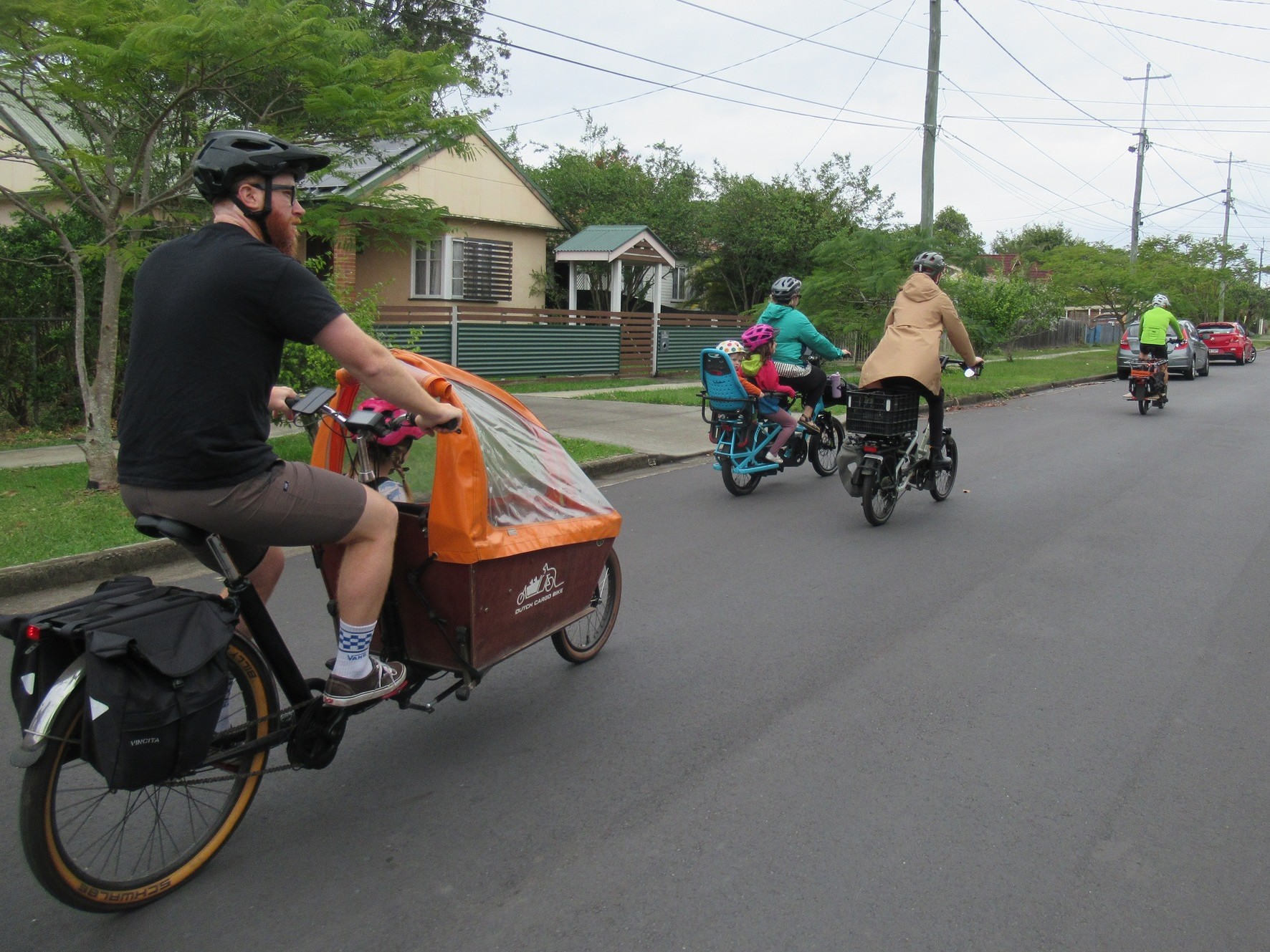
Today, Transport Minister, Brent Mickelberg MP clarified: this will mean that for someone to legally ride an e-bike (which has a low-power motor that only provides assistance when the rider is pedalling and must cut out at 25kph) they must be medically fit hold a driver’s licence. That is, they must be medically fit to operate a much larger motor vehicle with no power limit, and at speeds of up to 110kph.
There are many reasons why people might not be medically fit to obtain (or retain) a driver’s licence, but could otherwise safely ride a bicycle or tricycle with the benefit of electric assistance. Those Queenslanders will soon be denied an option for efficient transport to work and education, self-sufficiency in daily life (especially in places where public transport is poor or infrequent), a healthy way to get physical exercise and maintain social connections, and even the physical and cognitive rehabilitation or therapy they need.
It’s not just people with a permanent disability (who may be exempted, but certainly don’t need yet another layer of bureaucracy applying for and justifying such an exemption). People may not qualify for a driver’s licence—or may have theirs temporarily suspended or forfeited—if they suffer a head injury, seizure, stroke, heart condition, eye injury/condition, spinal injury, or need to take certain types of medication. Ironically, people who suffer episodes like strokes or heart attacks and have their licence forfeited may be recommended to use an e-bike as a means for physical exercise and cognitive rehabilitation while not straining/stressing the heart.
Adults with cognitive conditions such as the first stages of age-related dementia, or Down’s Syndrome, or severe Autism may be unable to pass the written test for obtaining a licence to drive a motor vehicle but may be very capable of cycling safely on an off-road path at 15 or 20km/h, and gaining enormous health benefits from doing so.
Queenslanders should be very concerned that our Transport Minister, Brent Mickelberg MP has said “I will acknowledge that will disadvantage some people who currently use these devices and are unable to drive,” but his message is that he doesn’t care about those people who will be caught up in his government’s ham-fisted attempts to legislate away behaviour and vehicles that were already illegal.
Here are just a few stories from people we have heard from over the last few days. (In some cases we have changed their names or details for privacy reasons):
Bronwyn says:
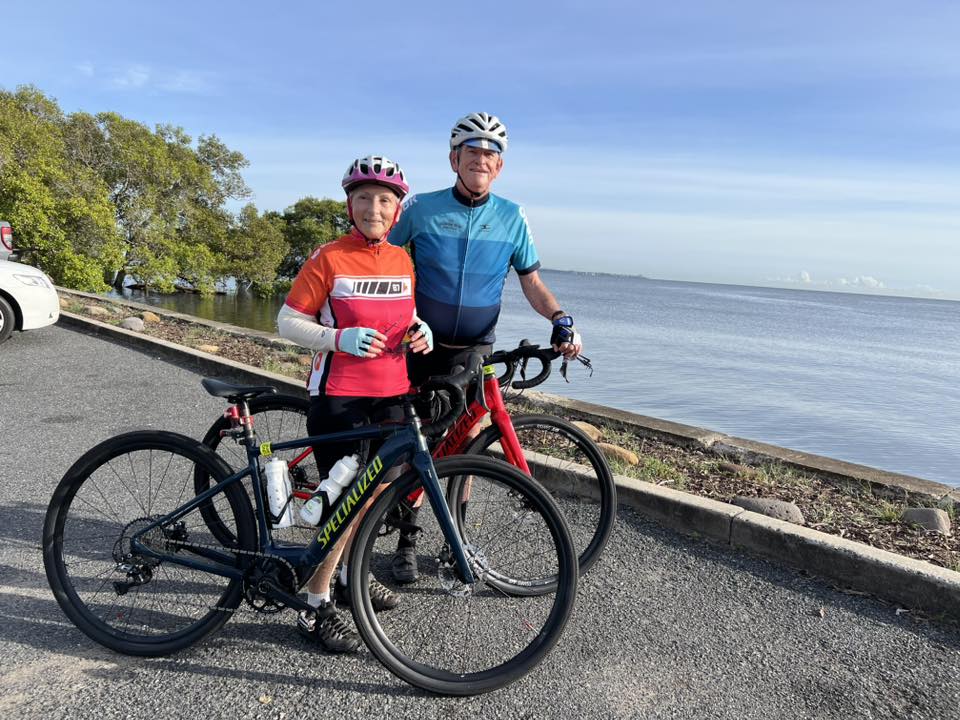
So my 80 year old dad lives in a hilly area and currently rides an ebike and regularly has to get a doctors certificate to keep his drivers licence. So when the doctor says he can’t drive anymore he will also not be able to exercise anymore either? It’s going to be a massive blow to his mental health not being able to drive to where he does his regular hobbies and then can’t do his regular exercise either.
David admits he’s feeling a bit sad and betrayed by the government, saying:
I’m getting close to 70-years old now, and I’m thinking the same thing. Will I have to start riding in traffic again, or give up riding an e-bicycle and go back to riding an unpowered bicycle?
Sarah is a middle-aged professional who developed an eye condition which eventually required her to have surgery to save her sight. Over a number of years while her eyesight was deteriorating, Sarah didn’t feel confident to drive a car, and decided not renew her driver’s licence. With her eyesight still fine for walking or cycling at 15-20kph, and since she lived within a comfortable distance from work and plenty of entertainment and social activities, Sarah purchased an e-bike. She quickly discovered it was the perfect way to get around, and the electric assistance meant she was able to dress fashionably for her destination rather than arriving a bit puffed and sweaty from riding a regular bike up and down Brisbane’s hills in the heat and humidity. Now, after successful surgeries, Sarah could drive again, but having discovered the joy of travelling by bike and the savings from not owning a car, she tells us she probably won’t go back. Now Sarah might have to reapply for her driver’s licence anyway just so she can keep riding her e-bike.
Patrick lives in one of Brisbane’s outer suburbs, and has tackled quite long commutes by bicycle for fitness and because he just enjoys cycling. A few years ago Patrick suffered a head injury and subsequent seizures, and doctors advised he should not drive for at least 12 months. Without feasible public transport options, that would have left Patrick unable to get to work—which was casual employment at the time—but an e-bike was the perfect solution; with electric assistance he could ride a bike without raising his heart rate and blood pressure to levels which could trigger another episode. If he had had to ride much of that long commute on shared paths at 10kph (which the government also intends to legislate), getting to work by e-bike would have been much less feasible. When riding an e-bike requires being medically fit to hold a drivers licence, someone in Patrick’s position in future might find they can no longer continue working.
Luke probably fits the description of “avid cyclist”, having been a bike racer and working in the industry. He’s also never had a drivers licence and never owned a car. Apart from saving money, cycling has always been a more convenient and faster method to go to the shops, socialise, commute to/from work and exercise. Luke has epilepsy, and although he’s currently medically fit to hold a driver’s licence, he hasn’t felt the need. A few years ago, results from a heart check caused the doctors some concerns, and Luke was told to limit his cycling to 50km per week with no intensity for approximately 18 months. (Not something a competitive sportsperson wants to hear!) The doctor advised Luke to either buy a car, rely more on public transport or buy an ebike. He chose the ebike.
Luke found his regular commute took substantially longer on an e-bike where the motor cuts out at 25kph whereas he could ride much faster on a regular bike. But the ebike was still quicker than public transport; the extra time it took to walk to/from the train station really made that “dreadfully slow”. With the proposed new rules around ebikes, Luke may soon need to get that driver’s licence even though he doesn’t want to drive, and his epilepsy could prevent him in future.
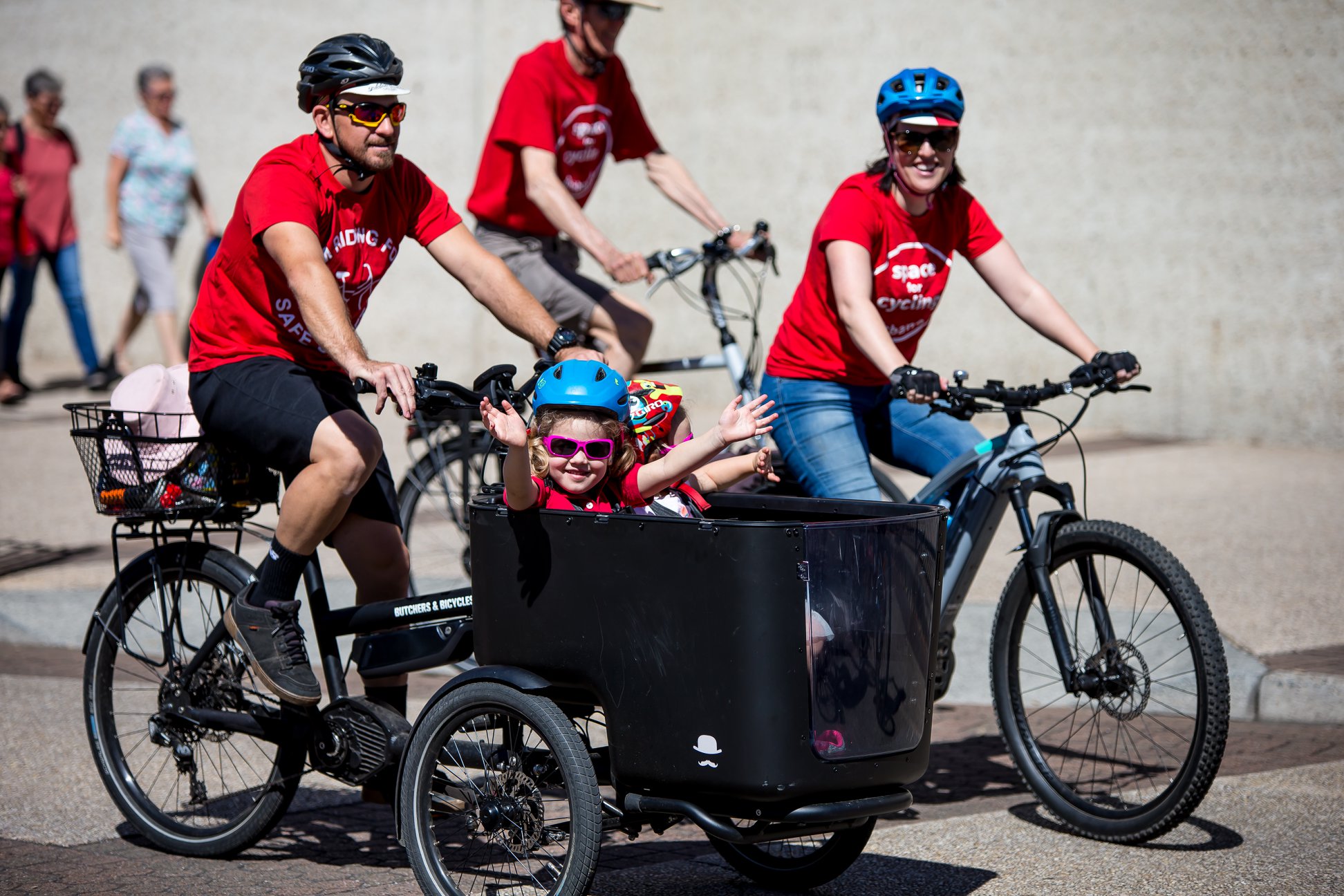
Ben is a long-time friend of Space4cycling who also has epilepsy and who was medically unfit to drive for years while his daughters were young. An electric-assist cargo bike became the dad-taxi, and the vehicle for many great family adventures. Ben recently shared his story with the ABC, urging the state government to consult more with the community before making any changes.
“I think it’s a major backwards step because they haven’t actually identified the problem, the problem is e-motorbikes and high powered scooters and people not appropriately riding them.”
Well said Ben; we couldn’t agree more!
 Space for Cycling Brisbane